
Hardware
TKL Keyboard
A custom 86-key low-profile keyboard, designed across the PCB, switch fit, enclosure, and backlighting.
Technologies: KiCad · PCB design · CAD · ZMK
Stage: V12 design and manufacturing files; physical prototype validation pending
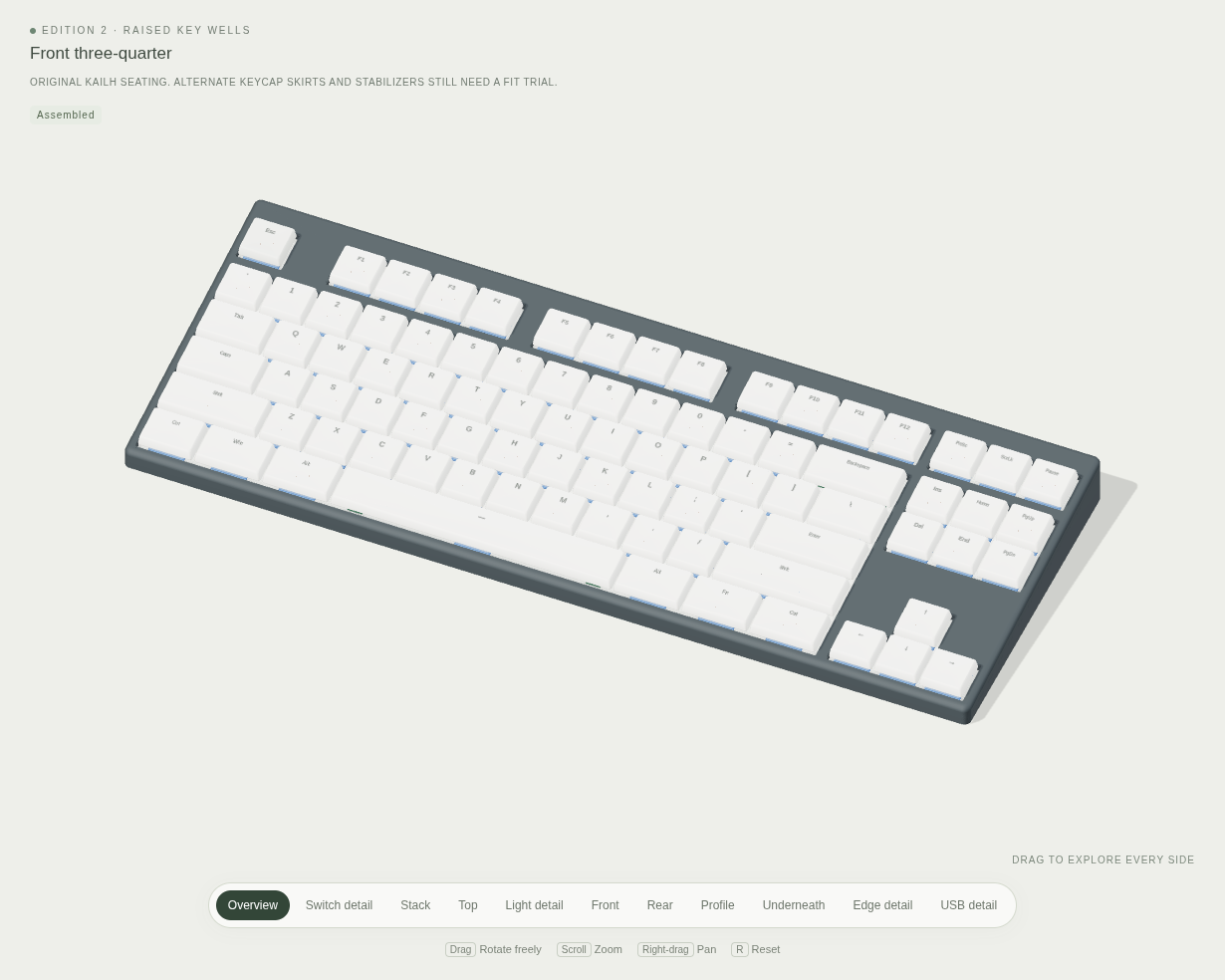
A keyboard designed as a complete system
This project brings together the parts of a keyboard that are often considered separately: the electrical matrix, switch footprints, plate, case, battery, and lighting. The goal is a low-profile keyboard with a familiar tenkeyless layout, developed through successive PCB and enclosure revisions.
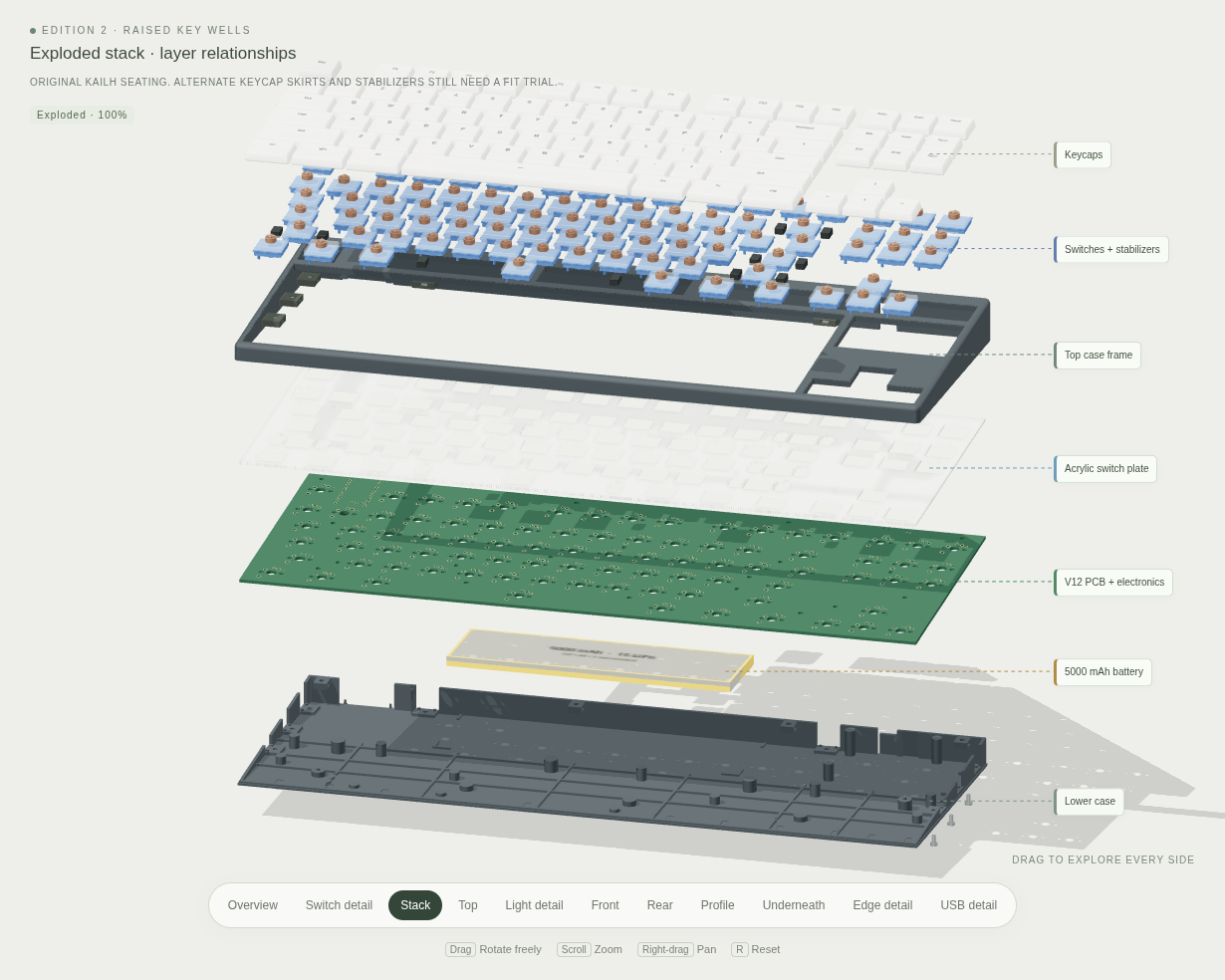
The current V12 design has 86 keys and a two-layer PCB. Its manufacturing package includes schematics, Gerbers and drill files, assembly drawings, and component placement data. An interactive 3D viewer lets me inspect the assembly, separate its layers, and compare switch and keycap combinations.
One PCB, three switch families
V12 preserves the original Kailh Choc V2 switch positions and adds mounting patterns for Choc V1 and selected Gateron Low Profile 3.0 switches. These are soldered footprints, with one switch family chosen for a build.
The electrical matrix stays the same across those choices. The mechanical stack does not: switch seating height, stem interface, keycap travel, and stabilizers all affect how the keyboard fits together. The Gateron option still needs its own plate-height and case-clearance work.
Keeping those distinctions explicit is an important part of the design. A compatible pin pattern alone does not establish that the complete keyboard will fit or feel right.
Working through the lighting and enclosure
Ten reverse-mounted LEDs shine through openings in the PCB toward an acrylic switch plate. The design explores using that plate to distribute light, with a regulated LED driver and a ZMK PWM integration reference for brightness control.
The case studies include floating-key and raised-surround versions. Exploded views make the relationships between the keycaps, switches, plate, PCB, and battery easier to inspect. They also expose places where a change in one part affects the rest of the assembly.
From design checks to a physical prototype
The saved V12 validation reports show clean electrical and design-rule checks, no unrouted connections, and agreement between the schematic and PCB. Export checks also cover the manufacturing files and placement data.
Those checks support a prototype handoff. The next stage is physical bring-up: checking switch fit, the case and plate stack, lighting behavior, charging, and the controller. The firmware material in this revision is an integration reference rather than a complete, tested keyboard firmware release.