
Hardware
Autonomous Chessboard
A physical chessboard design with magnetic piece movement, collision-aware planning, and an interactive assembly simulator.
Technologies: Python · OpenSCAD · CoreXY · Three.js
Stage: Design and simulation; physical prototype not yet tested
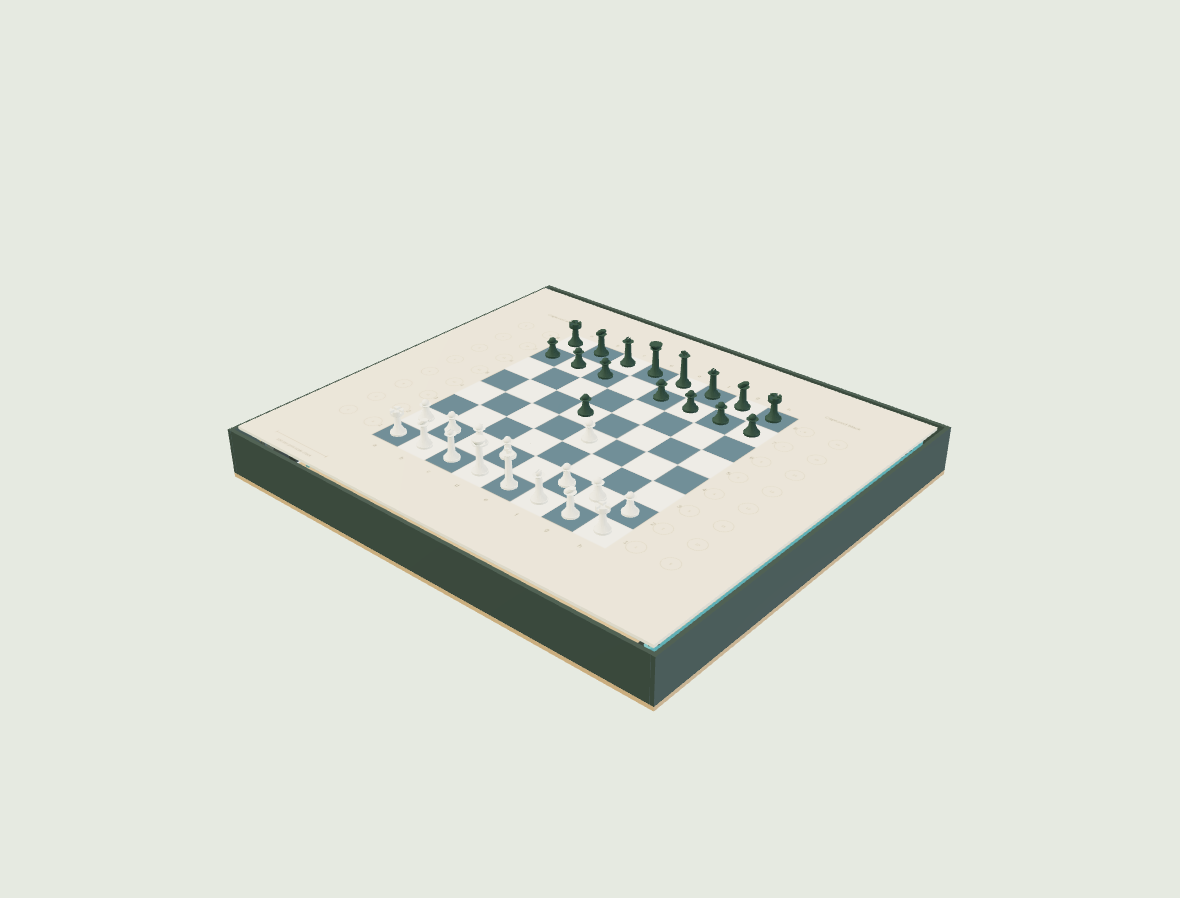
Moving real pieces on a real board
This project explores a chessboard that moves its own pieces. An electromagnet travels on an XY gantry beneath the playing surface and slides magnetic pieces between positions. Holding areas beside the board provide space for captured pieces.
The design supports human-versus-computer, computer-versus-computer, and manual play. The software and assembly visualizations demonstrate those modes; the physical mechanism is still at the design and feasibility stage.
A legal move is only the beginning
Chess rules describe where a piece may finish. A mechanism also needs a route that avoids the other pieces on its way there.
The Python planner uses A* search with clearance checks around occupied positions. It checks entire path segments, rather than only their endpoints. Narrow piece silhouettes and the board’s spacing leave routes between occupied squares.
Captures need an ordered sequence: first move the captured piece into holding, then move the attacker to its destination. The planner also handles the separate transfers involved in castling and en passant. Promotion changes the piece’s logical identity; the current design does not automatically exchange its physical shape.
Chess rules come from python-chess, and the simulator can connect to an external UCI engine. Without one, it uses a seeded legal-move player to exercise the planning system.
Connecting geometry, sensing, and CAD
Shared geometry configuration drives the motion planner and generated design files. The mechanical concept uses two stationary motors in a CoreXY arrangement, with a fixed-height electromagnet and no powered vertical axis.
The sensing design calls for 96 recessed Hall sensors: 64 playing positions and 32 holding positions. Occupancy changes and move history are used to infer human moves. A sensor diagnostic exists, while the full motion-control firmware and sensor carrier PCBs remain unfinished.
The 3D viewer combines actual panel and chess-piece meshes with proposed mechanism envelopes. It can show assembled and exploded layouts, expose the underside of the panel, and play movement sequences generated by the planner.
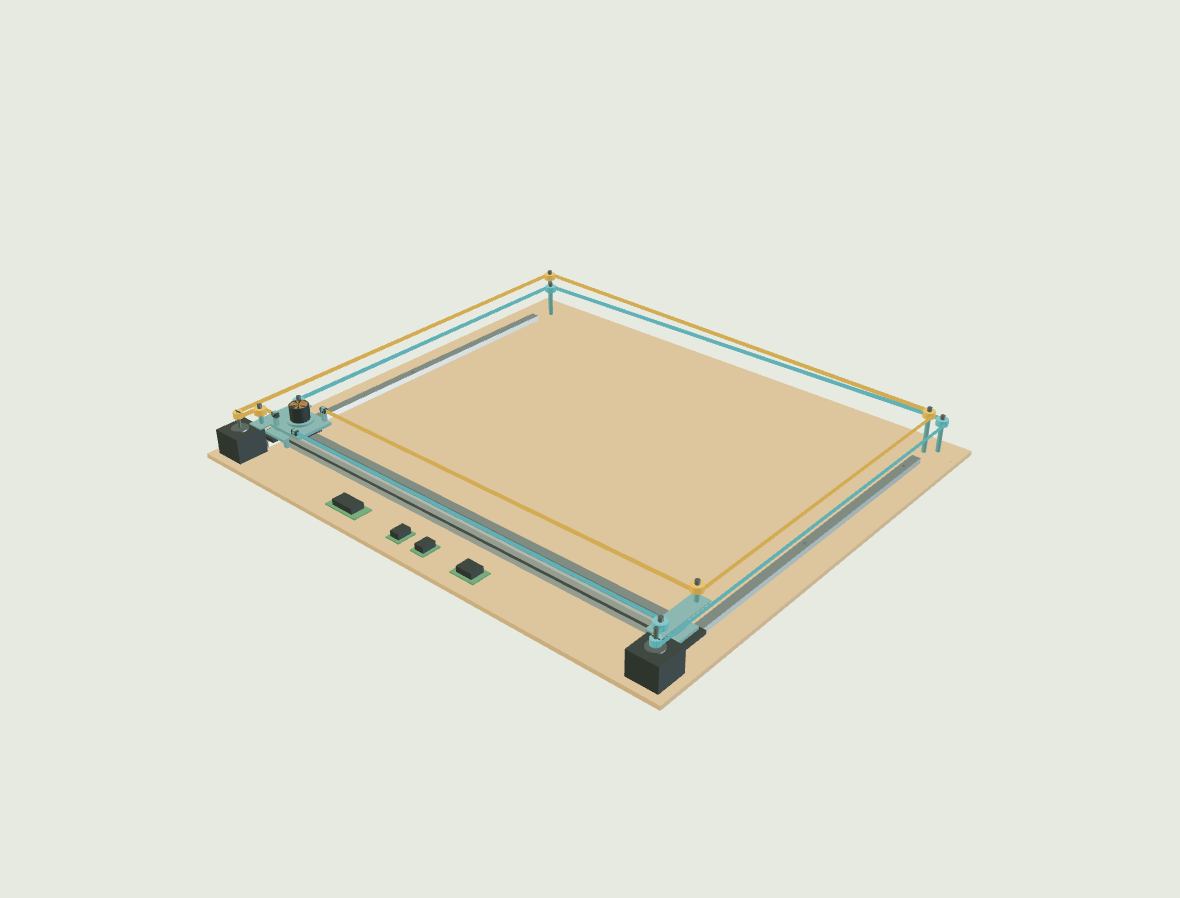
The next experiment is physical
The current shallow-case study targets an enclosure roughly 720 × 630 × 80 mm. That is a design target, with motor dimensions and detailed mounts still affecting the result.
The immediate next step is a small feasibility prototype: establish magnetic grip and release through the intended surface, then check clearance, panel stiffness, and sensing behavior. The CAD, geometric planner, and simulator make the design inspectable before committing to the complete machine.